“can only go up from here”

A day at the park
Becoming a parent is not a title I have taken lightly, having to understand that I will be learning as I go in this process. All the usual expectations are there: to feed my child with nourishing food, to laugh with him when he is silly and make sure he is curious as his mind grows. As we reached his sixth birthday, I could see a shift in him that gives great example to when exactly cognitive growth happens with my boy. When you’re around a child enough, you notice the growth spurts in their mind before you ever do their physical body. Their speech pattern, the way they think and how they interact with the world all becomes a little more advanced, strengthening with each interaction they have with their peers and family members.
We move into the new year and this shift is not one I am prepared for. My sweet darling boy could no longer take pause and breathe, learning both in school as well as at home the coping mechanisms. He was getting swept up in the whirlwind of his emotions, escalating to the point of tears and exhaustion. In the soft, even-toned voice of a caring mother he could not find his way out of emotional turmoil, a thick fog that seemed impossible to navigate. Even the most emotionally regulated parent wouldn’t be able to pull him back from the edge, and I cant help but find myself shouting against an opaque mist and losing control, too.
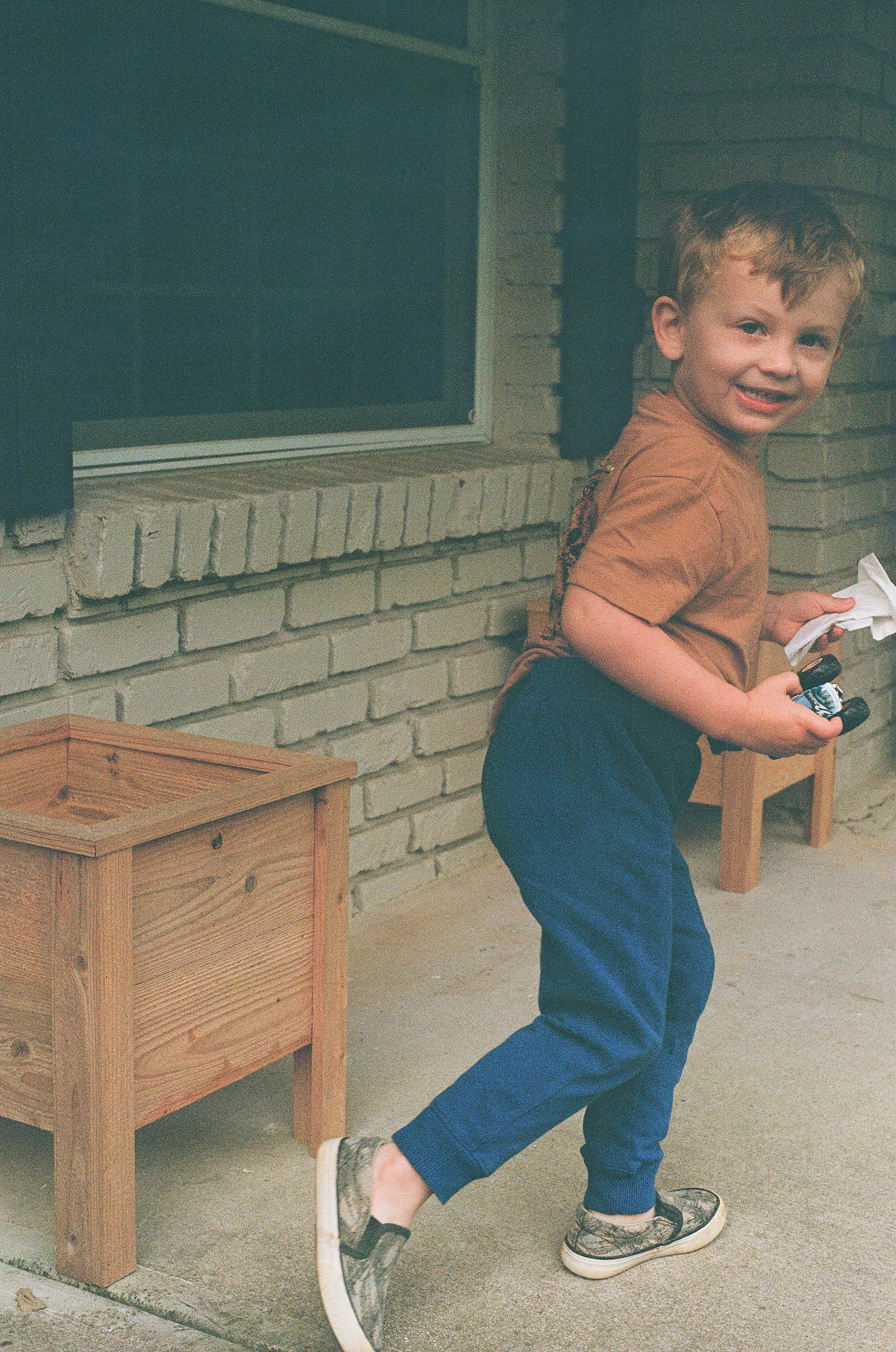
Marietta, Georgia - 2023
Yelling on both ends: a parent’s worst nightmare. This is where your own stable feelings start to slip after awhile, especially if you are not regulated yourself. I had to help myself and I had to help Ted, there was no question about either one, but how? We had student support meetings at school and a play therapist we saw every other week, so my only next logical step was diagnostic. Ted’s father, alongside other mental health ailments, has an ADHD diagnosis that mirrors his son’s in ways of movement and creativity. It just makes sense: ADHD is genetic and age six is when these symptoms truly start to show. For a little boy with ADHD, the emotional overwhelm is one of the first signs of the disorder, where not just anger or sadness, but excitement can also become too much for the child to handle.
Up until that point, I was under the impression there were six-month-long wait lists for adolescent psychiatric evaluations. I was checking back at least once a week and unable to find any doctor taking new patients within a 3 month time span. I felt hopeless for my situation, feeling the weight of what it means to have a child that desperately needs help.
Waiting, waiting, waiting. Wanting to help my sweet boy that has found himself in a void of emotions too overwhelming for anyone to deal with. I felt myself getting worse and not being the best mother I could be, even if I was actively searching for an answer for my boy. Feelings that, even now with active therapy, I still hold to myself and keep watch over. I am hard on myself for some reasons I do not understand while on the other side, I know I can be doing better and will rip myself to shreds over my lack of planning or weak execution. A parental mantra I recite often to those seeking advice on this side of the human experience is that parenting is hard, no question about that, but to be a conscious, present and fair parent is not for the weak. This was that moment for me: consciously accepting that something is wrong, being present to make decisions fast and to be fair in how I treat Ted, and myself, moving forward.

Can’t pass puddles without a quick splash
Finally: a silver lining. I’m doing my usual search and find an adolescent psychiatric appointment that is 2 weeks from that very day and you couldn’t have me schedule Teddy fast enough. I make sure all his pre-appointment paperwork is done so we don’t waste any time, and then more waiting. The in-between becomes our space of unknowing and a practice of patience that was much needed to get through.
There was no doubt that he would be given an ADHD diagnosis that first hour with the psychiatrist, I had the genetic receipts to prove it worthy. But what would be the next step? Medication? I couldn’t fathom the idea… even though this was all part of my parental mantra of being fair not only to Teddy, but to myself as well. It would be unfair of me to not take an opportunity to help my child, even if it meant adolescent medication that I wasn’t sure of. I swallowed my pride in that office and told myself anything… anything to give my child a chance to feel regulated.
“Teddy has combined type ADHD, so we can help one part or both right now. Which one is more of a concern for you? His focus or his mood?”
I paused, a tissue near my mouth from tears stuck to my cheeks, and said, “Oh, his mood for sure. I think I can help his focus without stimulants.”
“Great, we’ll start him on guanfacine, half a pill twice a day. Its a medication used for blood pressure in the 60s, now repurposed for children with ADHD to help manage overwhelming feelings.”

A summer walk through the neighborhood
A sigh of relief unfurled itself from my body. There is no greater feeling than a parent finally getting an answer for their child’s mental health struggles. Granted, I was still worried that absolutely everything would blow up in my face and none of this would actually… work. We would be back at square one, trying to figure out how to help my boy who feels EVERYTHING so intensely, just like his mom. I had to see past the uncertainty and persevere, not just for myself but as an example for Teddy.
I didn’t know every outcome of this but I knew one thing to be certain: we would get through the trials of diagnosis together, and try something new if whatever we were doing wasn’t working.
The next evening (because of course my pharmacy couldn’t fill it that day, sigh), we start the guanfacine. Half a pill in a spoonful of yogurt and I try not to think about how my little boy still can’t even swallow pills yet. I smile at him, hoping he doesn’t spot the worry on my face, “What do you think? Do you like to take your medicine with yogurt?”. He smiles, too, with a “yeah!” and off he goes to play with his toys before bed.
Chronic worrying puts me in a position to prepare by means of research, where I was thankful to find mostly positive feedback with six year olds on guanfacine. The most common side effect is sleepiness, which made sense for lowering blood pressure, but the timelines varied. I was looking at anywhere between a couple of days to a couple of weeks of sleepiness to adjust but if that is the worst trade off, I’ll take it.
Night passes and we are on to a new school day, waking to encouragement and love that envelope Teddy like a warm hug on a cold morning. I’m full of doubts and pre-determined notions that I don’t ever let Teddy see from me and just hope for the best from here. I already let his teacher’s know of his diagnosis to prepare for any sleepiness or change in behaviors, so from here its a waiting game to see how he did. Its the in-between that always gets me.
By the afternoon, I’m still worried but all smiles while I meet Ted to get him off the bus. I tell him I missed him, then ask him how his day went. “I don’t know,” is the common answer lately, having a hard time being regulated and feeling social pressures to “do good”. I tell Teddy thats okay, we don’t always have good days, and I take a peek at the behavior notes that have kept me in the loop on how Teddy is doing in school. His teacher is wonderful and I could not have asked for someone more equipped to handle neurodivergency in the way this woman has.
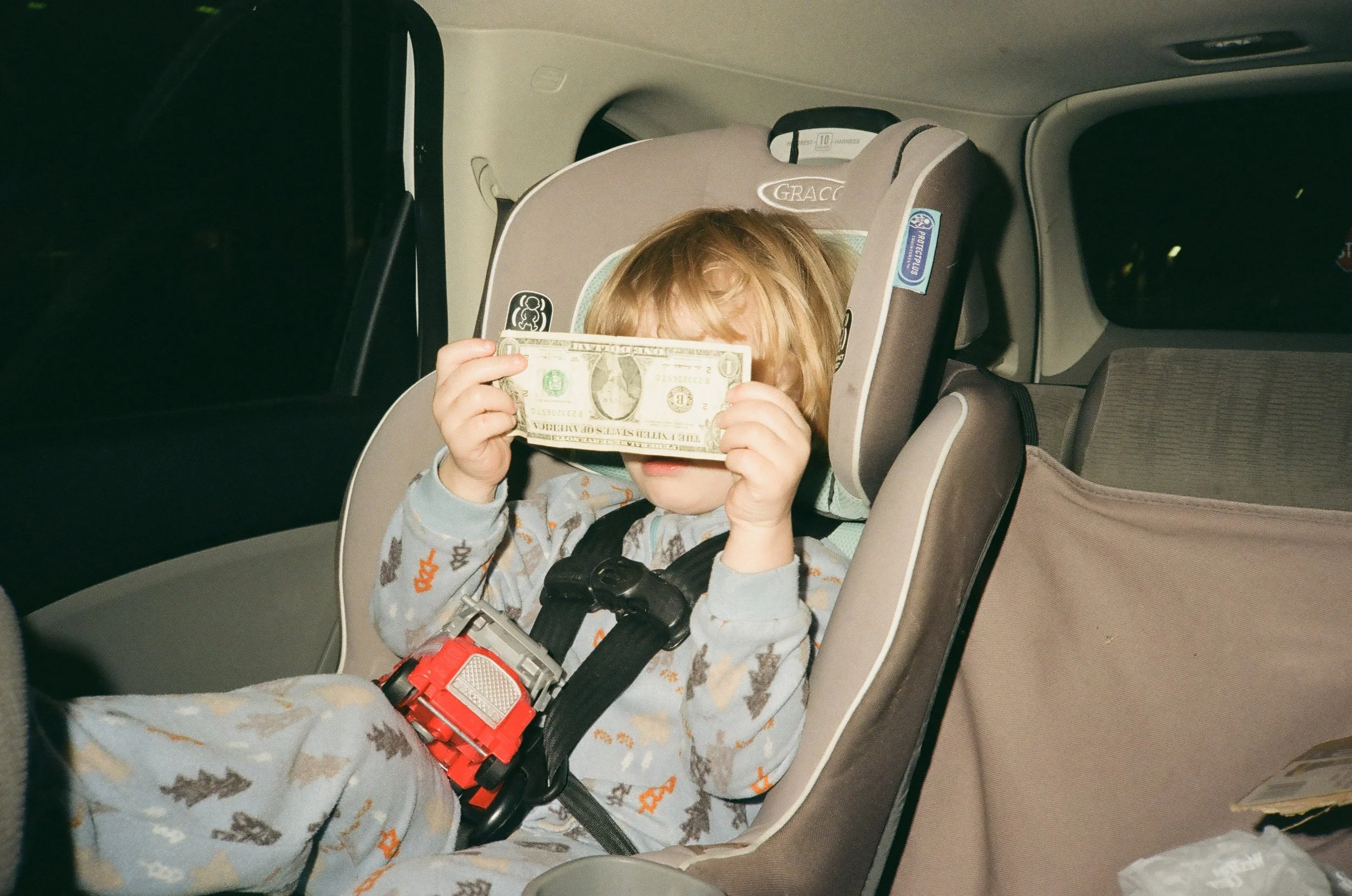
Teddy’s first dollar
“Came in tired and refusing to do morning responsibilities, yelling at teacher, falling asleep through the morning… woke up before lunch, did work. Sleepy through the afternoon and did not truly get up until STEAM. Incomplete work in folder.”
Not a perfect day by any means but so much improvement from previous, untreated days. Were going from being escorted out of class by the resource officer to playing with peers on the playground, uncontrollable outbursts to attempting work that was once deemed too hard to try… I really started to see what being regulated meant for my little boy. I felt guilty that I didn’t start something sooner, but I knew I was doing the best I could with what I knew.
Though it wasn’t the detailed notes recounting Teddy’s behavior that convinced me I did something right, or his rediscovered ability of coping mechanisms before emotions became too much to handle. My moment of clarity came rushing to shore in the vulnerable space of bath time, where all truth comes to light for my fiery Sagittarius.
“Thank you for getting me medicine, mommy.” Teddy is already seeing where he can go now that his feelings aren’t so hard to manage. “But I still feel angry.”
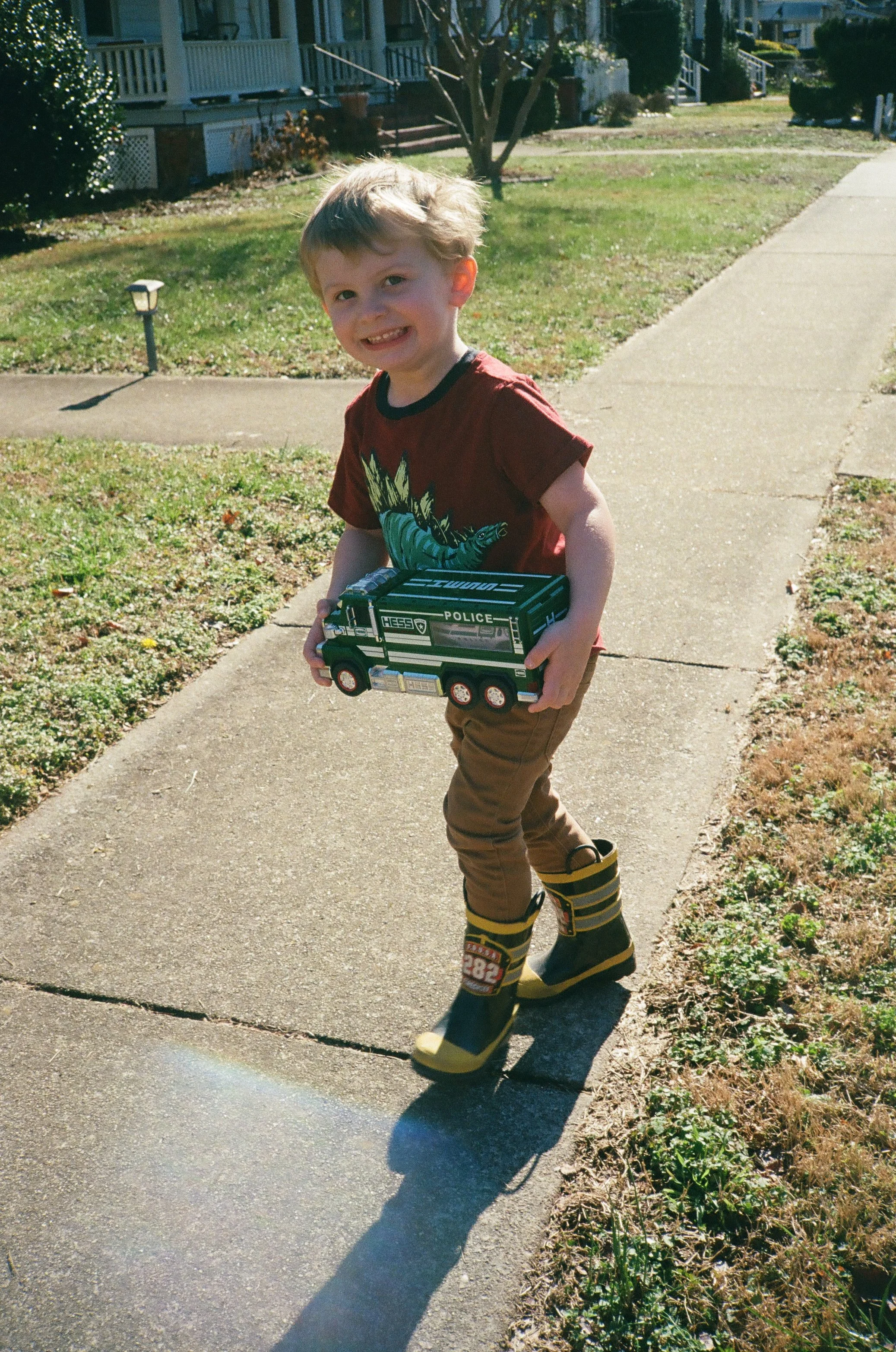
Always smiling for my camera
I laugh, not yet realizing the conversation I’m having with my boy, and kindly remind him that he will still feel angry but that anger will be easier to handle with his medicine. Keep it short, keep it brief; children at this age will only remember and process so many words at at time before they start tuning out their parent. Silent acceptance on Ted’s end but I still know I’m heading in the right direction.
It has been roughly a week since we started this new journey, sleepiness the biggest hurdle to overcome. Drowsiness aside, I’m having conversations with Teddy that I never thought I would get, seeing moments of pause-breath-continue before his feelings escalate and effort put toward school work that was once deemed too difficult to finish. I tell him how proud of him I am every day, not just for what he is overcoming but expressing kindness to himself throughout this journey. Something I forget to do for myself quite often.
Not only is it incredible what we teach our children, but it is incredible what they can teach us in the void of the unknown. I will never call myself a perfect parent but I know I am the perfect parent for my sweet little boy. He has been my reminder to not give up, not give in and to keep pushing for a life of love and happiness.
With a smile like his, who wouldn’t want the best for their child?